
English| EUR
Suggested for you
More currencies
Choose a language
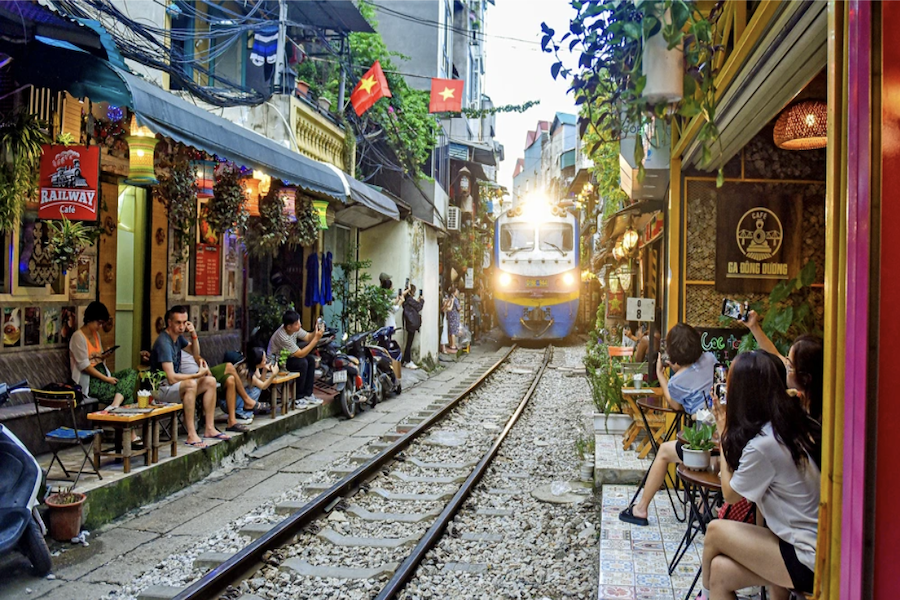
Train Street sits in the heart of Hanoi's Old Quarter, where active railway tracks run between cafés serving pho, banh mi, and Vietnamese coffee. Visitors arrive to eat, drink, and watch passenger trains pass within arm's reach of tables and plastic stools. Access requires purchasing drinks from local establishments, and timing matters—trains pass at irregular intervals, and cafés fill quickly before scheduled arrivals.
Quick answer
Train Street is open daily from 09:00 to 22:00, with free entry requiring a mandatory drink purchase at one of the railway-side cafés. Arrive 30 to 60 minutes before scheduled train times to secure seating and order food. Trains typically pass in the morning and late afternoon, but schedules change without notice, so confirming times with café staff upon arrival ensures you witness a train passage during your visit.
What began as a residential lane with scattered street vendors evolved into a dense corridor of coffee shops and food stalls after tourists began photographing the trains in 2018, prompting authorities to briefly close access before reopening with stricter café licensing. A hanoi street food tour train street experience centers on the food as much as the railway spectacle. Vendors grill nem lui sausages over charcoal braziers, steam banh cuon rice rolls on demand, and ladle bowls of bun rieu crab noodle soup from pots balanced on motorbike seats. Egg coffee and coconut coffee are staples, but the bánh mì stands at the southern entrance near Dien Bien Phu Street draw longer lines, particularly the cart serving pâté, grilled pork, and pickled daikon on baguettes baked that morning. Train schedules shift weekly and depend on freight and passenger service adjustments, so the 30-to-60-minute arrival window before expected train times accounts for variability. Café staff monitor railway signals and warn patrons minutes before a train approaches, giving just enough time to move chairs, pull in merchandise, and raise phones for photos. North of Le Duan Street, the alley widens slightly, and families occupy metal folding chairs with better sightlines but less dramatic proximity. The Hoan Kiem District authorities enforce café access rules strictly: no lingering on the tracks without a purchase, no blocking emergency exits, and no trespassing into residential doorways for vantage points. Plain-clothes officers issue on-the-spot fines for rule violations, and repeat offenders face café blacklisting. Most visitors pair their hanoi street food tour train street visit with stops at Dong Xuan Market or the Temple of Literature, both within two kilometers, making the alley a midday or late-afternoon anchor in a broader Old Quarter walking route.
“Plastic stools are stacked, patrons press against walls, and the locomotive inches past with mirrors folded and commuters waving from open windows.”
The most effective way to experience Train Street is during the designated best arrival window of 09:00–21:30. Arriving 30-60 minutes before scheduled train times is critical to secure a seat at a local cafe and ensure a comfortable viewing experience.
—
These sessions offer the quietest atmosphere for enjoying food and photography.
Dry, 25°C–32°C
This period is popular for capturing the train transition with natural lighting.
Humid, 24°C–29°C
Expect peak foot traffic and limited seating availability during these busy hours.
Verdict: Visit Tuesday to Thursday mornings, arriving at least 30-60 minutes before your preferred train time to secure a seat.
Access to the Hanoi Train Street area is free of charge. Visitors are required to purchase a beverage from a local cafe to remain in the designated seating areas.
Train Street operates along active railway tracks where trains pass within arm's reach of cafe tables. Visitors must follow cafe owner instructions and railway safety protocols to avoid accidents and ensure the street remains accessible.
Everything you need to know about hanoi street food tour train street
Children are welcome to visit with their families, but they must be supervised at all times due to the proximity of the railway tracks. Safety is paramount when near moving locomotives in this urban setting.
While you can visit independently, booking a guided journey through the city landmarks provides historical context and navigation assistance. Guides can help manage your timing so you do not miss the rail schedule.
To catch a passing train, plan your arrival well in advance of the scheduled times. Staff at local cafes can often provide the most current information regarding train movements for the day.
Most organized culinary excursions focus on broader neighborhood tastings, though some may incorporate a stop here. Check specific tour itineraries to confirm if food consumption is included during your visit to the tracks.